Practicing Tai Chi after 50 is not an age-related compromise; it is the ideal somatic vantage point. By letting go of superficial muscular ambition, mature practitioners can tap into the genuine essence of internal boxing: natural sensory perception, spinal decompression, and effortless liquid buoyancy.
Grandmaster Dong Bin's Direct Instruction: Why Authentic Tai Chi Starts After 50
When Master Wang Zhixiang took his very first formal lesson from his revered mentor, Grandmaster Dong Bin (a top disciple of the legendary Yang style master Dong Yingjie), the elder master imparted an insight that initially baffled him:
"Xiao Wang, you can only truly understand and master Tai Chi Chuan after you turn fifty years old."
At the time, young martial artists often assume that strength, flexibility, and high-flying kicks define martial prowess. But Grandmaster Dong Bin corrected this misconception. In youth, practitioners unconsciously rely on raw muscular tension and skeletal force. When Grandmaster Dong taught well into his eighties, he could no longer deploy heavy muscular force—yet his internal neutralizing skill was at its absolute zenith. He operated entirely through relaxed sensory listening (Ting Jin), natural alignment, and harmonious internal energy.
The Four Foundations of 'Tai Chi Thinking' (Taiji Sixiang)
According to Master Wang Zhixiang, Tai Chi Chuan is fundamentally an educational instrument, an embodied somatic model designed to establish correct Tai Chi Thinking. This cognitive and bodily framework rests upon four classical cosmological concepts:
- Wuji (The Boundless Void): The primordial state of serene emptiness before movement emerges. Without calm mental stillness, true movement cannot be regulated.
- Taiji (The Dynamic Balance of Yin and Yang): Constant alternation between full and empty, soft and firm, expanding and contracting without stagnation.
- Five Elements (Wuxing): The dynamic stepping transformations (Forward, Backward, Left, Right, and Center Equilibrium).
- Eight Trigrams (Bagua): Spatial awareness across all eight cardinal and diagonal dimensions (Up, Down, Front, Back, Left, Right, Inward, Outward).
Master Wang compares integrating these four principles to brewing a nourishing broth: water, ingredients, and seasoning must blend into a single harmonious elixir. When you practice forms, you are not merely executing choreography; you are embodying these four concepts.
Living the Art: The 'Water Pouring' and 'Farm Labor' Insights
A central danger in mature practice is treating Tai Chi as an isolated 30-minute hobby that gets erased by tense habits throughout the rest of the day. Grandmaster Dong Bin insisted that Tai Chi must be experienced in every mundane human gesture:
The Courtesy of Pouring Water: When offering a cup of tea to a guest, if you push your arm forward with tense rigidity, your posture loses balance. True Tai Chi requires that as the hand moves forward, the spine remains suspended (Xu Ling Ding Jin) with an internal sensation of backing up. Front and back balance each other symmetrically.
Labor Without Fatigue: During years of hard agricultural labor turning soil with heavy shovels, Grandmaster Dong applied Tai Chi wave mechanics—rising with the swell and descending with gravity like an ocean wave. While others were utterly exhausted after 30 minutes, he worked 8 hours feeling refreshed because work became continuous form practice.
Mind Cultivation, Pure Intention, and Energy Preservation
Internal vitality (Yuan Qi) is delicate. Master Wang emphasizes that mental friction immediately translates into muscular rigidity. In his international European seminars, he strictly forbids practitioners from speaking ill of other schools or boasting about supremacy:
"Negative speech and arrogant thoughts contract the fascia and disrupt steady breath. When you slander others, you implant tense seeds in your own subconscious. By observing respectful speech and diminishing greed and agitation, the internal nervous system relaxes completely."
This ethical and mental clarity allows the blood vessels and microcirculation to expand naturally during gentle movement, producing the restorative warmth often celebrated in Daoist longevity traditions.
Biomechanical Safety: Joint Decompression and Fall Prevention
For practitioners over 50, protecting load-bearing cartilage is paramount. Conventional high-impact exercise can aggravate degenerative osteoarthritis, whereas Water Tai Chi emphasizes three restorative biomechanical principles:
- Opening the Kua (Inguinal Crease): Releasing the hip joint (Song Kua) prevents excessive torsion on the knees. The knee tracks strictly above the toes without bowing inwards.
- Lengthening the Lumbar Spine: Sinking the tailbone gently while relaxing Mingmen (Gate of Life) encourages a neutral pelvic alignment and eases muscular tension in the lower back, helping reduce compressive discomfort associated with habitual compensatory tightness.
- Proprioceptive Sole Awareness: Grounding weight through Yongquan (Bubbling Well, K1) trains subconscious foot receptors, substantially improving dynamic postural stability and balance recovery—mechanisms thoroughly documented in contemporary clinical fall-prevention research.
Authentic Martial Art vs. Superficial 'Tai Chi Gymnastics'
Without the internal mind intent (Yi), repeating graceful hand gestures remains mere “Tai Chi gymnastics” (Taiji Cao). It may offer mild limbering, but it cannot generate profound Neigong resilience. Once you cultivate authentic Tai Chi Thinking, the exact number of form repetitions matters far less: walking, sitting, breathing, and resting all become effortless vessels of martial longevity.
Structured Curriculum & Next Lessons
Frequently Asked Questions
Why does Grandmaster Dong Bin say Tai Chi begins after age 50?
Younger practitioners frequently lean on muscular tension and speed. After 50, physical wisdom encourages releasing tension, allowing natural listening perception (Ting Jin) and internal neigong to emerge.
How does Water Tai Chi protect sensitive knees and hip joints?
By releasing the pelvic crease (Kua) and aligning joint pathways toward the feet, improper twisting stress on the knees is minimized, promoting functional lower-limb stability and joint ease.
What is the difference between Tai Chi boxing and Tai Chi gymnastics?
Tai Chi gymnastics copies external choreography with muscular force. Authentic Tai Chi boxing is guided by internal mind intent (Yi), cosmological balance, and continuous fluid energy.
How much daily practice is ideal for mature adults?
A gentle, consistent daily routine of 15 to 30 minutes—combining standing alignment, calm breathing, and slow movement—allows practitioners to cultivate relaxed awareness and mobility at their own comfortable pace.
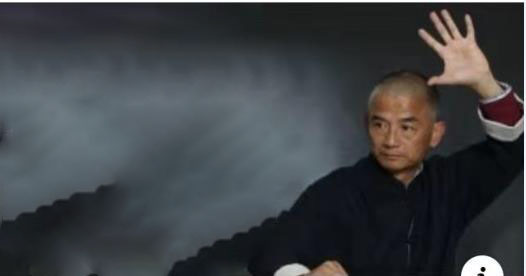
About Master Wang Zhixiang
Former Vice Chairman of the Shanghai Wushu Association, graduate of Shanghai University of Traditional Chinese Medicine. Studied under great Tai Chi grandmasters including Master Wang Zhuanghong, Master Dong Bin, and other prominent Tai Chi luminaries. Dedicated to sharing Water Tai Chi globally for over two decades.