The Ancient Maxim Decoded: Intent Over Exertion
Among all maxims preserved in the Tai Chi Classics, none is more celebrated than 'Use Mind Intent (Yi), Not Muscular Force (Li)' (Yong Yi Bu Yong Li). In an in-depth dialogue recorded in Wuyuan, Master Wang Zhixiang explains the practical bio-mechanics behind this principle. When a person relies on muscle (Li), antagonistic muscle groups contract simultaneously, creating internal friction that exhausts energy and slows down reflexes.
By contrast, cultivating intent (Yi) directs the nervous system to coordinate fascial chains seamlessly. The physical body remains soft and responsive, allowing intention to lead kinetic energy through the skeletal frame without impedance.
The Spinal Hydraulic Whip and Borrowed Momentum
When intent leads, the spine behaves like a supple whip anchored in the earth. Power does not originate in the arms; it ripples from the rooted feet through the undulating spinal vertebrae, culminating effortlessly in the fingertips.
Furthermore, when an opponent attacks with force, the practitioner does not resist. Instead, they borrow the attacker's own forward vector, slightly adjusting angle and timing. The opponent is catapulted through the air by their own momentum, bewildered by how minimal effort produced such staggering force.
Frequently Asked Questions
Why does muscular force limit martial efficiency?
Muscular contraction tightens opposing muscle pairs, creating joint friction, slowing reaction time, and causing rapid cardiovascular exhaustion.
How does mind intent (Yi) physically mobilize the body?
Intent directs the central nervous system to activate neuromuscular pathways smoothly, recruiting long fascial chains without localized tension.
What is meant by 'borrowing force' (Jie Li)?
It means accepting the opponent's incoming vector without opposition, adding minimal rotational guidance, and redirecting their momentum into empty space.
How can a student train to stop using muscle force?
By practicing forms in slow motion, keeping breathing natural, and consciously relaxing the shoulders, neck, and hips whenever tension arises.
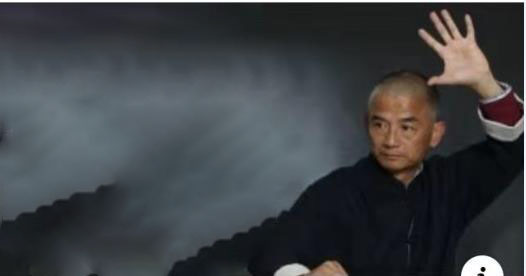
About Master Wang Zhixiang
Former Vice Chairman of the Shanghai Wushu Association, graduate of Shanghai University of Traditional Chinese Medicine. Studied under great Tai Chi grandmasters including Master Wang Zhuanghong, Master Dong Bin, and other prominent Tai Chi luminaries. Dedicated to sharing Water Tai Chi globally for over two decades.