In traditional Chinese martial arts, the external physical routines (forms or Taolu) can appear in countless shapes. One practitioner may move in wide, sweeping stances, while another practices compact, hidden steps. However, when observing Master Wang Zhixiang's Water Tai Chi, one realization becomes paramount:
"Forms may vary in a thousand ways, but the internal geometric principles of 'Three Circles, One Emptiness, and One Suspension' (三圆一空一顶) must never be compromised."
These five structural and energetic pillars are what truly define the boundary between Neijia (Internal Martial Arts) and Waijia (External Styles).
The Three Circles (三圆)
1. Round Crotch (Dang Yuan / 裆圆)
Rounding the crotch is the foundation of lower body rooting and mobility. When standing or shifting weight, the knees must open slightly with a buoyant outward tension, the toes slightly inward, wrapping the hip joint (Kua).
Beginners often pinch the knees inward or clamp the groin, causing the crotch to form a sharp, acute "V-shape". A V-shape creates a rigid structural pinch-point, which immediately locks the knees, causes excessive shear stress on the knee joints, and cuts off pelvic circulation.
Correct Execution: Maintain a gentle, rounded "U-shape" at all times, like an ancient stone bridge arch. The arch can bear immense weight precisely because force is distributed along smooth curves.
2. Round Dantian (丹田圆)
The Dantian (lower abdominal energy center, located approximately 1.5 to 3 inches below the navel) must not be sucked in tightly, nor should it bulge outward aggressively. It should feel naturally inflated, full, and round from all 360 degrees.
Many practitioners experience Qi stagnation in the chest, causing palpitations or tense shoulders. Master Wang reveals an invaluable secret key: if Qi feels stuck, gently exhale through an open, relaxed throat with the silent or subtle syllable "Ha" (哈). As the breath releases, chest congestion dissolves, and Qi naturally drops and fills the Dantian with round fullness.
3. Round Mingmen (命门圆)
Mingmen (Gate of Life, DU-4) sits on the lumbar spine opposite the navel. In normal standing, people have a severe lumbar lordosis (swayback), which pinches the spinal nerves and cuts off vertical power generation.
The Dynamic Opposition: "Rounding Mingmen" does not mean mechanically tucking the pelvis into a frozen lock. Instead, the Mingmen is allowed to breathe backward, while the tailbone (Wei Lu) is subtly projected forward and downward in the mind. This dynamic pair creates an elastic elongation of the entire spinal column.
The One Emptiness and One Suspension (一空一顶)
4. Empty Kua (空胯) & 5. Intangible Crown Suspension (虚灵顶劲)
Empty Kua (Kong Kua / 空胯): The hip fold where the femur connects to the pelvis must remain hollow and empty of tension. If the Kua is clamped, your turns will be jerky. When the Kua is empty, body movement becomes as fluid and effortless as swirling water.
Intangible Crown Suspension (Xu Ling Ding Jin / 虚灵顶劲): This is the crowning jewel of internal martial arts. Many mistakenly stiffen the neck or physically push their head up. Master Wang emphasizes: "Never use muscular force. It is guided purely by quiet intention (Yi)." Imagine a silk thread gently lifting Baihui (crown) to the heavens, leaving the neck muscles completely soft.
The Fundamental Divide: Neijia vs. Waijia
How do we distinguish authentic internal Tai Chi from external acrobatics or calisthenics? Master Wang points out the core metric:
| Dimension | Internal Martial Arts (Neijia / Tai Chi) | External Martial Arts (Waijia) |
|---|---|---|
| Crotch Structure | Rounded U-shape (Springy, continuous root) | Rigid V-shape or overextended split |
| Abdomen & Qi | Dantian naturally round; breathing deep and relaxed | Stiff chest, clamped abdominal wall |
| Lower Spine | Mingmen open and gently rounded backward | Hyper-extended swayback (swaying waist) |
| Power Origin | Elastic fascia, Qi circulation & intention (Yi) | Localized muscular contraction and brute force |
Frequently Asked Questions
Knee pain is almost always caused by a collapsed or "V-shaped" crotch where the knee collapses inward past the toes. By rounding the crotch into a "U-shape" and wrapping the Kua, knee joints are immediately freed from destructive torsional shear.
Use it whenever you notice tension creeping into your chest, throat, or shoulders during standing pole (Zhan Zhuang) or form practice. A soft, unvoiced "Ha" exhalation relaxes the vagus nerve and drops Qi instantly into the Dantian.
Every single posture—whether Parting the Wild Horse's Mane or Single Whip—must preserve the Three Circles and One Suspension. The moment a circle collapses, internal power (Jin) leaks out.
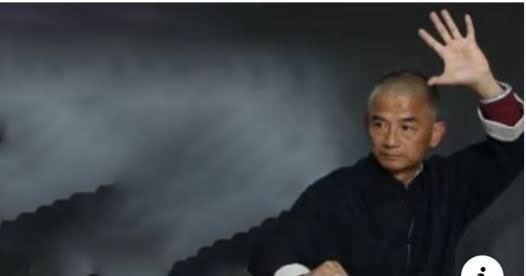
About Master Wang Zhixiang (王志祥老师)
Master Wang Zhixiang graduated from Shanghai University of Traditional Chinese Medicine and was former Vice Chairman of the Shanghai Wushu Association. Studied under great Tai Chi grandmasters including Master Wang Zhuanghong, Master Dong Bin, and other prominent luminaries. For over twenty years, he has taught Water Tai Chi and Eastern philosophy across Europe, lecturing at the TCM Universities of Italy and Switzerland, as well as the Universities of Milan and Rome.